Cerebellar stimulation is a specially designed training program aimed at improving the function of the brainstem and the cerebellum itself.


Monday-Sunday 08:30 - 20:00

Kyiv, 17 Kovpaka St. (On the map)
Bila Tserkva, 191A Tarashchanska St. (On the map)
Cerebellar stimulation is a specially designed training program aimed at improving the function of the brainstem and the cerebellum itself.
The cerebellum is one of the most important parts of the brain. It is responsible for coordination of movement, maintaining balance, and regulating muscle tone, and is also involved in the development of intellectual and speech functions, emotional control, "muscle memory," and attention. Under normal conditions, this brain structure instantly receives and processes information coming from the sense organs and other parts of the brain.
The cerebellum sets the rhythm of movements and controls behavioral reactions. A person with cerebellar disorders will hardly manage to touch the tip of the nose with eyes closed without difficulty. The state of the cerebellum affects the character of speech, the emotional background, and the degree of control over the body. A problem in the work of this "mini-brain" may be one of the possible reasons why a child is clumsy, learns new information poorly, is impulsive, has difficulty developing skills, tires quickly, and is constantly distracted by extraneous things.
Cerebellar stimulation is a specially designed training program aimed at improving the function of the brainstem and the cerebellum itself. The set of therapeutic, preventive, and rehabilitation exercises that this neurocorrection system involves may help with the following:
In addition, completing a course of cerebellar stimulation may support positive personal changes and improvements in performance and speed of information processing. Attending the sessions in the program may also help improve a child's physical fitness and posture and develop endurance.
With cerebellar stimulation, hurried, unclear speech may become clearer and calmer. By the end of the course, improvements may also be seen in logical thinking and math skills, lower anxiety and aggression, the development of empathy, and better spatial perception.
Exercises designed to stimulate the cerebellum may be especially useful for children who have the following problems:
It is also advisable to consult a specialist in this area of neurocorrection if a child started walking late and/or did not start talking on time. A course of cerebellar stimulation may also be worth considering for children who attend sessions with a special education teacher, a speech therapist, and a psychologist. Such training may help increase the effectiveness of therapy.
Doctors usually include cerebellar stimulation as part of comprehensive treatment of cerebral palsy, developmental delays, speech and mental developmental delay, autism spectrum disorders, sensory integration dysfunction, cerebellar ataxia, logoneurosis, and the like.
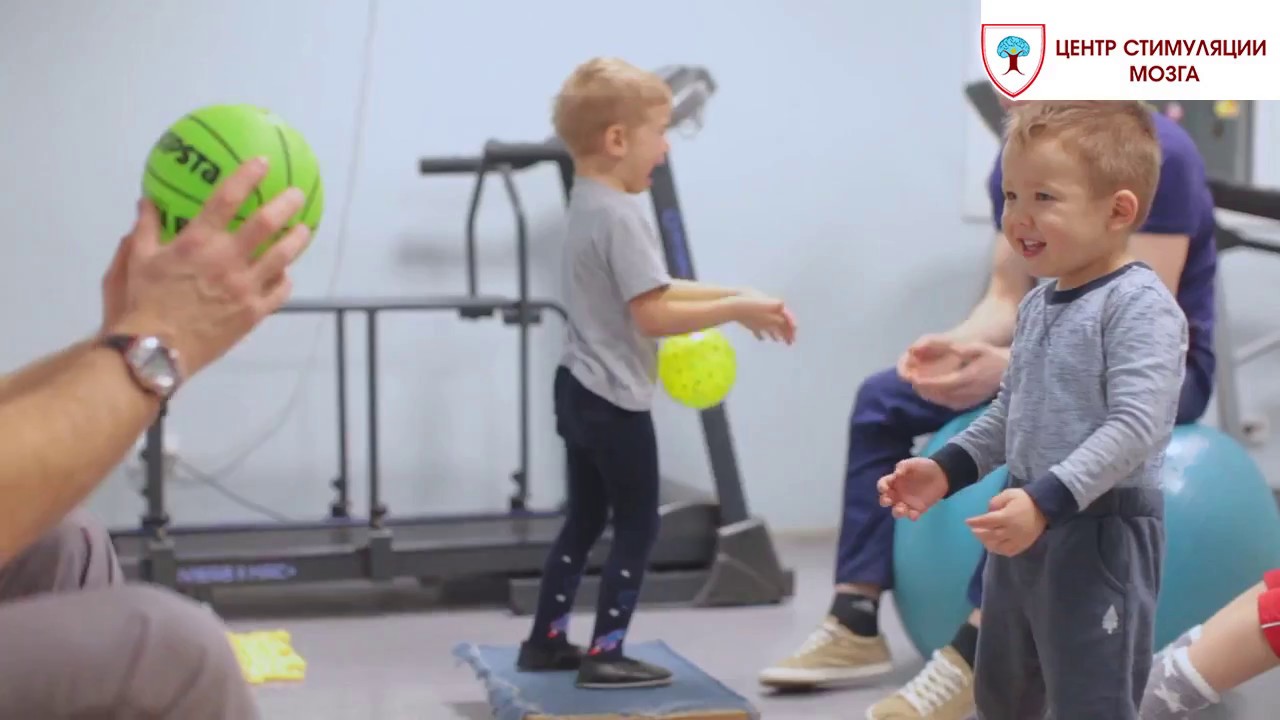
The main equipment for training in the cerebellar stimulation program is a special balance board. Most exercises are performed using it. As an option, a so-called balance maze is often used instead of the board. Additional equipment usually includes the following items:
In general, cerebellar stimulation sessions have much in common with therapeutic exercise classes. If needed, exercises from another range may be added to the program. For example, at CSM Clinic in Kyiv, vestibular gymnastics is included alongside training aimed directly at improving cerebellar function.
The set of exercises for cerebellar stimulation is chosen based on the child's individual characteristics. For the best possible effect, the doctor first needs to clarify the nature of the problem and how advanced it is. That is why, before starting, the specialist holds a preliminary consultation.
The minimum number of sessions in the cerebellar stimulation program is 10-15. The length of treatment is determined by the specialist at the initial consultation. It is quite normal practice, however, to extend or shorten the course after therapy has begun, because it is impossible to calculate exactly how quickly positive changes will appear; everything is very individual.
Cerebellar stimulation sessions are usually held three times a week. Each lasts 30-45 minutes on average. Sessions can be either group or individual.
Specialists use proprietary methods. The cerebellar function training programs at CSM Clinic are developed strictly on an individual basis. The set of exercises is selected personally for each patient, which aims to make the treatment as effective as possible.