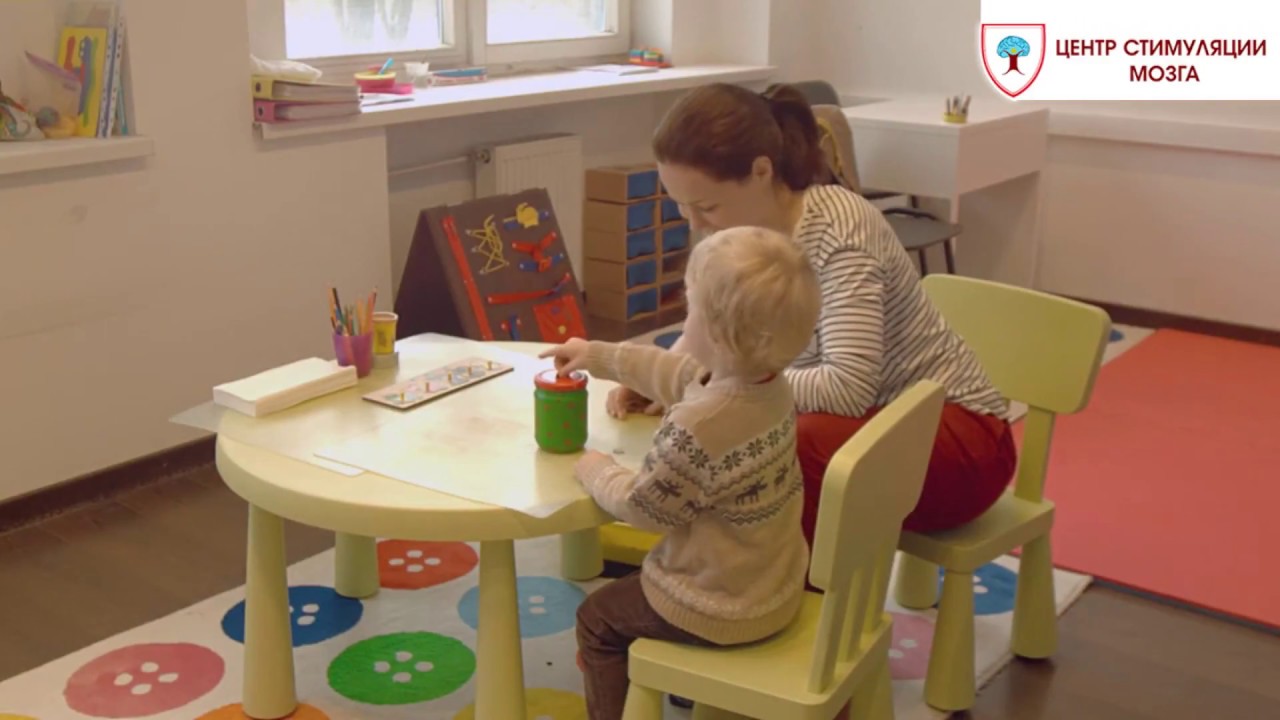
Fine motor skills are a person's ability to make purposeful, controlled movements with the fingers of the hands or feet.

Monday-Sunday 08:30 - 20:00

Kyiv, 17 Kovpaka St. (On the map)
Bila Tserkva, 191A Tarashchanska St. (On the map)
Fine motor skills are a person's ability to make purposeful, controlled movements with the fingers of the hands or feet.
Fine motor skills are a person's ability to make purposeful, controlled movements with the fingers of the hands or feet. A child refines finger motor skills while growing up, but begins mastering them from birth. At our CSM Clinic, young children are taught this natural but very necessary process: to use their own hands confidently in order to reach small and big goals.
Simple motor skills involve grasping an object, holding it, and then working with it (eating, getting dressed). Fine and complex motor skills involve writing, drawing, and painstaking work (cutting out figures, making appliqués, origami, knitting, modeling). When a person performs a movement, nerve impulses, finger muscles, and the bone-and-joint and visual systems are all involved at once.
Developing finger motor skills helps a child master the everyday skills they need and also prepare for school. A child who uses their hands confidently will not be distracted by how best to hold a writing instrument without dropping it, and can therefore focus more attention on the learning process.
Researchers have found a direct link between motor skills and speech function. Observations suggest that when motor skills are developed, speech develops as well. The motor and speech centers of the brain are located close enough to each other to interact.
A child with well-developed fine motor skills of the hands gains qualities that help in daily life and learning:
A small child is a plastic creature. This means that they retain what most adults have lost: the ability not only to develop rapidly but also to change under the influence of that development. Therefore, in the future, if along with developing the fine motor skills of the hands a child is encouraged to love creativity and taught to think independently, the little person may grow into a thoughtful individual with aesthetic taste and a subtle perception of the world around them.
A person with nimble fingers looks more expressive and attracts interest. But without the participation of the factors mentioned, motor skill development alone cannot raise a sharp mind or a gifted personality.
Over time, hand motor skills will become something more than the ability to write letters and hold a spoon. They will become the foundation on which mom, dad, and teachers continue the development of the little person.
Simple exercises to improve finger mobility and dexterity are recommended starting at 7-8 months. Sessions with an instructor at a specialized center begin after age 2. In our clinic, we teach younger and older preschool-age children.
It is recommended to improve hand dexterity both in the preschool years and in the upper grades of school. There is a common opinion that fine motor skill development is useful for young people up to age 20-21, since growth stops and the skeleton is finally formed in this period, and also because at 20 young people are still studying, though no longer at school but at an institute or university.
For fine motor skills of the hand to develop fully, activities are selected with the child's age in mind. Age determines the potential from which exercises are chosen and dictates the needs that must be taken into account to reach the developmental goal.
Fine motor skill development in 2-year-olds takes place through simple activities and games such as pat-a-cake. A two-year-old works only with the palm, and the fingers take little part in grasping.
Fine motor skills in children aged 2-3 develop through finger games (such as the traditional "Magpie-Crow" rhyme), performed by adults with a massaging effect.
Fine motor skill development in children aged 3-4 involves the fingers, as the child grasps and manipulates objects. Puzzles, construction sets, and making paper figures are useful.
At 4-5 years, a child learns to tie shoelaces and button buttons. Therefore, exercises focus on painstaking work done with the fingers. Exercises are also aimed at developing hand mobility and wrist rotation.
At 5-6 years, a child combines motor skills with kinetic skills. The little person learns to sense themselves in space.
Fine motor skills for children aged 6-7 are a serious stage of preparation for both education and independence, because the first grade and school life lie ahead for the preschooler. Therefore, the help of caring parents will no longer be constant.
Imaginative thinking, expressive speech, and the ability to count develop. Exercises with small objects are aimed at developing the finger phalanges. In addition to special exercises, a six- or seven-year-old child benefits from modeling, drawing, assembling construction sets, and learning to play the guitar or piano, as well as helping mom with housework.
Fine motor skill development in children at CSM involves speech therapists and psychologists, who take into account the age, needs, and abilities of each child.
Exercises for developing fine hand motor skills in children are built on play elements. This helps spark the child's curiosity and keep them engaged in the activity.
Safe objects that cannot cause injury are used in this play. These include loose materials: grains and sand; plastic materials that change under the influence of the hands: plasticine, clay, salt dough; objects that stimulate the imagination: paper and cardboard; and multi-piece toys that require logic: blocks, puzzles, construction sets, Lego.
Miniature items (beads, buttons, shells, pebbles, clothespins) exercise the groups of short finger muscles.
When working with children, our instructors monitor the difficulty of the exercises. For this purpose, the fine motor skill sessions alternate. Simple exercises are followed by more complex ones, and the child masters everyday movements and learns to perform functions that develop logical thinking and creative imagination.